Dr. Mahendra Dhawade, Founder President of Baliraja Party
(Do the people of India not have the right to comment or write about a minister?)
Under the Indian Constitution, citizens have the legal right to criticize, comment on, or write about government ministers and public officials. This right is rooted in the fundamental right to freedom of speech and expression, though it comes with specific legal boundaries. The people of India do have the right to comment on or write about a minister. This right is protected under the Constitution, but it is not unlimited.
Constitutional Right to Free Speech
Article 19(1)(a): This article guarantees Freedom of Speech and Expression to all Indian citizens. It allows you to express your opinions, write articles, or comment online about public figures, including ministers.
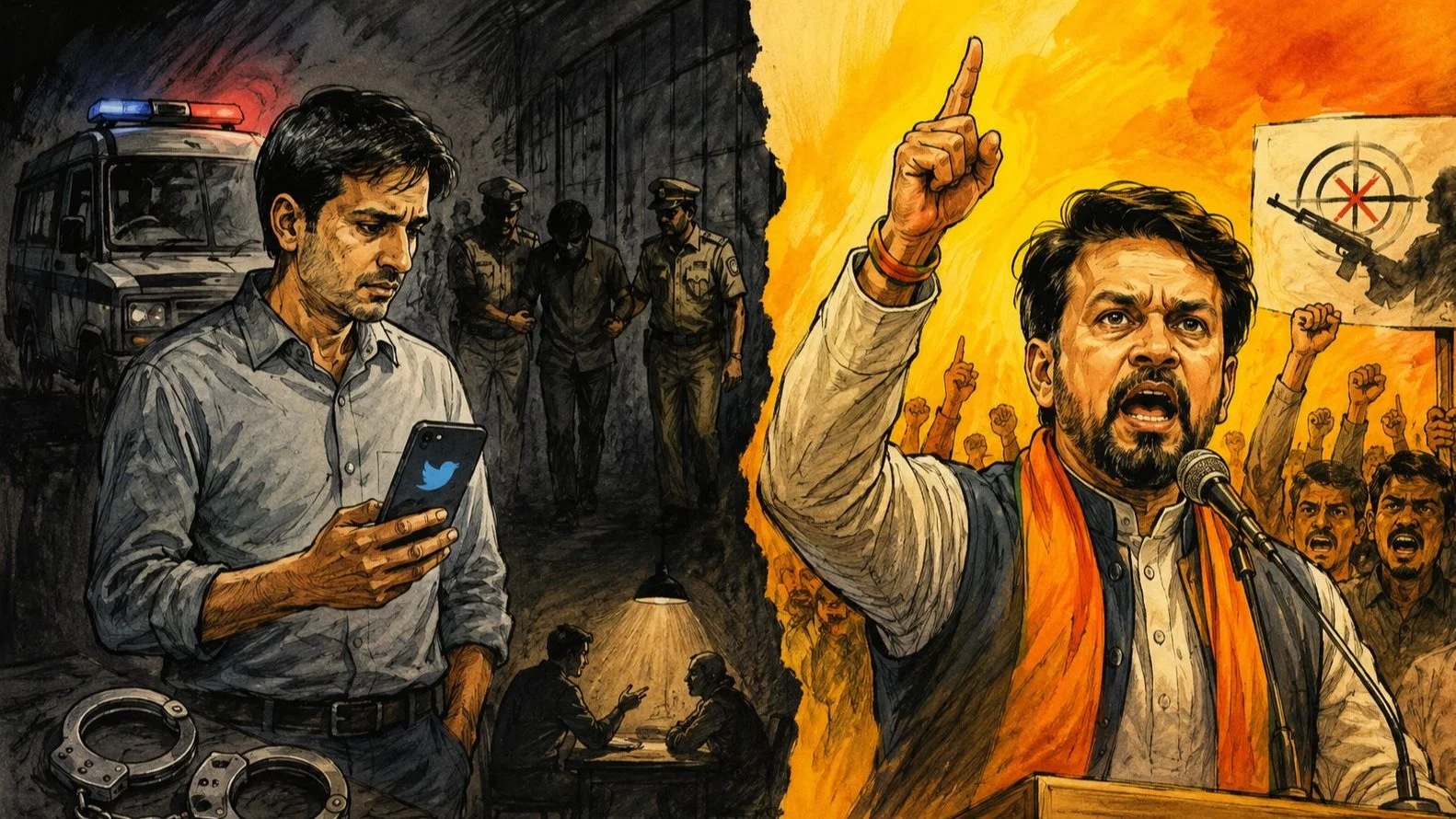
Supreme Court Rulings The Hon’ble Supreme Court of India has consistently emphasized that public officials, particularly those holding constitutional or political office, are subject to a higher degree of public scrutiny and criticism, which is integral to democratic accountability. In a significant judgment delivered in 2023, the Court further clarified that statements made by a minister in an individual capacity cannot be attributed to the government or invoked as a basis for restricting the fundamental rights of citizens. The judgment reaffirmed the importance of protecting freedom of expression and dissent in a democratic society.
The Supreme Court and various High Courts have repeatedly held that this includes the right to criticize the government, its policies, and public officials, including ministers and even the Prime Minister.
As one recent ruling put it, “Every citizen has the right to comment on, compliment and criticize the government’s actions.”
He is a 1992-batch officer of the Indian Post & Telecommunication Accounts and Finance Service (IP&TAFS), a central civil service under the Government of India, and has served as Controller of Communications in the Department of Telecommunications before retiring in March 2026.
Who is Ashish Joshi ?
Joshi is an IP&TAFS officer (not IAS/IPS), who rose to the rank of Additional Secretary-level post as Controller of Communications in the DoT.
He has been active on social media, often commenting on governance, elections, and civil-service conduct; he was suspended in 2019 over a complaint he filed against a politician, and that suspension was later revoked in 2021.
Recent news (Sept 2026): Delhi Police detained him for questioning over social-media posts; he later alleged around 9-hour interrogation and that police did not promptly inform his family, citing constitutional safeguards.
Multiple reports published in 2026 attribute to Ashish Joshi the position that informing a family member about a person’s detention or interrogation constitutes a constitutional safeguard under Article 22(1) of the Indian Constitution. Joshi has also invoked the Supreme Court’s guidelines in D.K. Basu v. State of West Bengal (1997), particularly in the context of preventing custodial abuse and safeguarding the rights of detained persons. However, the available search results do not indicate the existence of a standalone, publicly circulated article authored by Joshi that provides a detailed exposition of constitutional rights. Rather, his rights-based arguments appear to have been articulated primarily through social-media posts and media interviews following his detention.
Why some people get confused about his background?
He is sometimes mislabeled as “IAS” in media and online discussions, but he has clarified (and multiple outlets confirm) he belongs to IP&TAFS, a Group-A Central Service.
Desh ke gaddaron ko, goli maaro saalon ko"
(Shoot the traitors/scoundrels of the country). It gained widespread attention during the political rallies and protests in Delhi what did the police do about this?"
Anurag Thakur and Kapil Mishra, both associated with the Bharatiya Janata Party (BJP), have been prominently linked to the use and public popularization of the slogan, “Desh ke gaddaron ko, goli maaro saalon ko,” during political rallies and public campaigns.
Anurag Thakur - During the January 2020 Delhi Assembly election campaign in Rithala, the then Union Minister of State for Finance was captured on video leading an election rally. From the podium, he chanted the first part of the phrase ("Desh ke gaddaron ko..."), prompting the gathered crowd to loudly roar back the second part ("...goli maaro saalon ko").
Kapil Mishra - The BJP leader was also prominently documented using the controversial slogan during marching rallies and protests in Delhi around the same period, leading up to the 2020 Delhi riots.
The slogan drew severe criticism from opposition parties, civil society, and activists who labeled it as hate speech that incited violence. Following the incident, the Election Commission of India (ECI) issued a temporary campaign ban on Anurag Thakur and removed him from the BJP's Star Campaigners list for violating the Model Code of Conduct. Years later, petitions filed in courts demanding a criminal FIR against the politicians for inciting hate speech were dismissed, with the Supreme Court of India ultimately ruling that the speeches did not establish a cognizable offense.
How can Ashish Joshi be given different justice and Anurag Thakur be given different justice ?
The question of perceived differences in justice between retired bureaucrat Ashish Joshi and BJP politician Anurag Thakur stems from the distinct legal frameworks, institutional protections, and case histories that apply to them. Critics and political observers frequently debate whether public figures receive differential treatment, but legally, these differences are determined by the specific laws and procedures governing each case.
Ultimately, differential outcomes in the justice system are fundamentally shaped by the specific sections of the law invoked, the presence or absence of evidence deemed adequate by judges, and the distinct statutory protections assigned to state officials versus elected legislators.