Dr. Mahendra Dhawade, Founder President of Baliraja Party
Baliraja Party and so many OBC organizations, opposition parties, and some state governments want the Census to count OBCs with the same clarity and structure as it does for SCs and STs—ideally via a dedicated column and a fixed, pre-coded list of castes.
What’s the issue with the current Census format?
While the Government of India has decided to include caste enumeration in the upcoming digital census, a major controversy has erupted over how OBCs will be counted compared to SCs and STs.
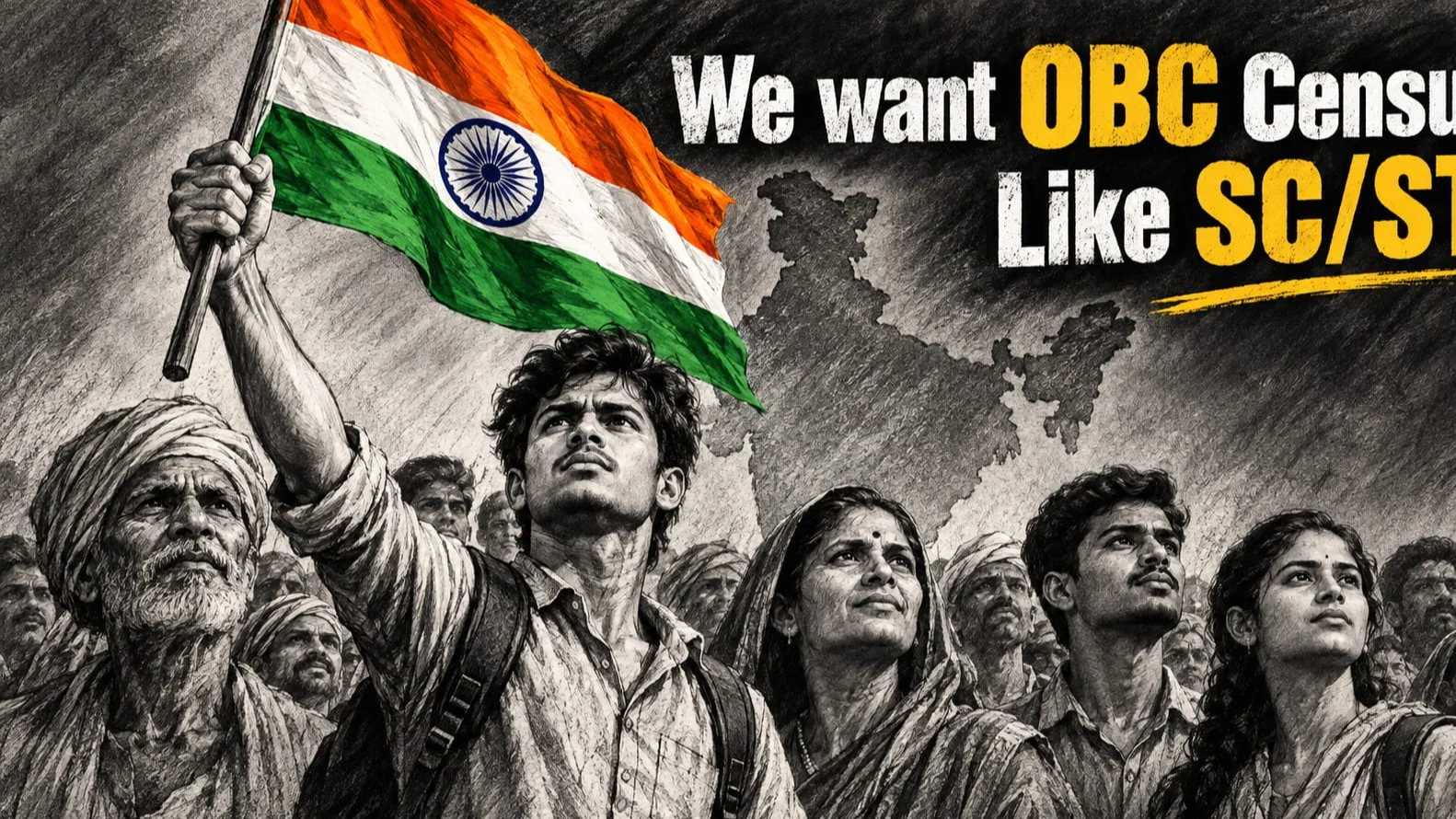
Why OBC Groups Want an "SC/ST-Style" Dropdown Census*
OBC groups, experts, and opposition leaders argue that the government's current "open-column" approach will result in chaotic, unusable data. They are demanding a system identical to SC/ST tracking for several critical reasons-
1) In the 2011 Socio-Economic Caste Census (SECC), an open text-field method resulted in over 46 lakh (4.6 million) distinct caste names because individuals wrote different spellings, sub-castes, or colloquial terms for the same group. The government ultimately withheld the data citing these anomalies.
2) Activists argue that without assigning a unique alphanumeric code to every recognized OBC caste beforehand, the collected data cannot be accurately aggregated.
3) Members of commissions like the Justice G. Rohini Commission point out that the 102nd and 105th Constitutional Amendments gave OBC lists official constitutional backing. They argue these pre-existing administrative lists should be used as standardized dropdown options rather than relying on open-ended text entries.
The 2026–27 Census questionnaire asks about social background as “SC/ST/Caste,” with SC/ST captured via pre-assigned codes from official lists, but OBCs and General category respondents must write their caste in an open field.
OBC leaders argue this will produce “cluttered, non-workable” data because thousands of caste names and spellings will be recorded without a standard coding protocol, making it hard to aggregate and use for policy.
They want a “Telangana-like” caste census approach, a structured enumeration where OBC is a distinct category with its own column and a drop-down or coded list derived from Central and State OBC lists.
What OBC groups are specifically demanding ?
Across 2026, national OBC conferences and leaders have pressed for-
• A separate OBC column in the Census form, on par with SC/ST, so enumerators can first mark OBC and then record the specific caste.
• Mandatory caste coding with unique codes for each caste (including OBC castes), using existing Central and State OBC lists to avoid free-text chaos.
• A published codification protocol before enumeration, plus a binding timeline to release caste/sub-caste data after counting.
• Independent, multi-party oversight of classification and tabulation so categories aren’t altered politically after data collection.
Clarity on policy : How the data will feed into decisions on the 27% OBC reservation cap, sub-categorization, welfare targeting, and representation.
Why OBC counting is harder than SC/ST
SC/ST lists are constitutionally fixed (Articles 341–342) and periodically updated by Parliament, enabling clean, pre-coded enumeration.
OBCs have two parallel systems, a Central list (for central jobs/education) and separate State lists (often larger and different), with no single unified national list.
This fragmentation is why governments have been cautious; OBC groups say it’s precisely why a structured, coded Census is necessary now.
Recent political pressure
Congress has publicly questioned why the form omits an explicit OBC category and warned that the current design will yield unusable OBC data; leaders like Mallikarjun Kharge and Rahul Gandhi have urged the PM to revise the questionnaire.
Telangana ministers have written to the Prime Minister demanding inclusion of a BC/OBC category and a more scientific enumeration method.
OBC bodies have warned they may oppose the Census exercise if mandatory caste coding and consensus on method aren’t ensured.
There should be more actionable steps that can be taken, such as:
(1) Add a distinct OBC column;
(2) Use pre-coded drop-downs from Central/State OBC lists; and
(3) Commit to releasing disaggregated caste data with independent oversight.
Class or Caste :
Government officials have justified dropping the use of strict pre-coded OBC dropdown lists by stating that Central and State OBC registries feature "classes, not just castes". These lists include occupational groups, localized labels (such as "tea garden workers" or "local born"), and communities that are classified as OBC in one state but SC or ST in another. The open-column approach was finalized at the highest administrative levels to let individuals declare their specific jati freely, which the government hopes can later be sorted.
In my opinion, this explanation is flawed, and I would caution that an uncodified census could result in a massive waste of public funds.